
Physics Fundamentals Blogs
All these blogs are carefully researched and written under the guidance of experienced Physics professors. Here, you will find clear, reliable, and easy-to-understand solutions to every concept and problem related to Physics Fundamentals
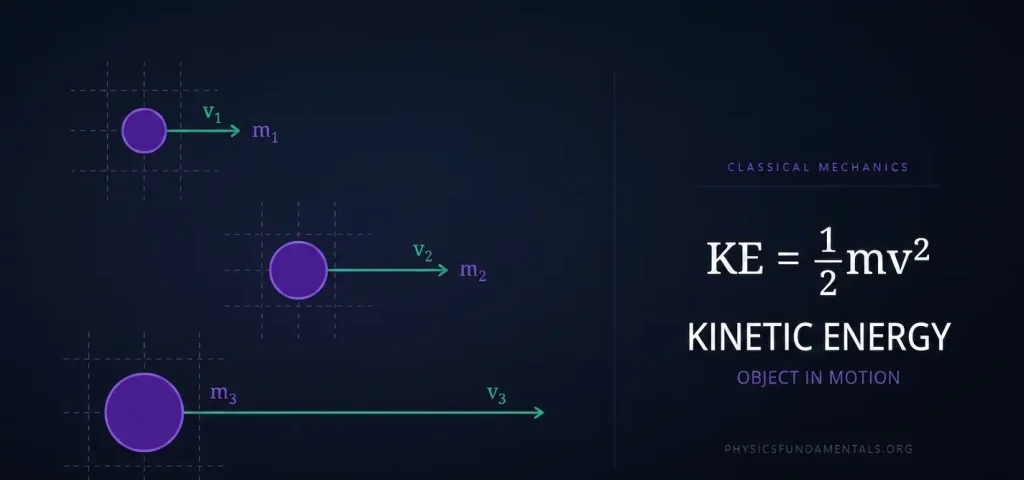
Kinetic Energy
Kinetic energy (KE), is the energy an object possesses because of its motion. Every moving object — from a rolling football to a speeding rocket — carries kinetic energy. The faster an object moves, the more kinetic energy it has. This form of energy exists everywhere in everyday life and is one of the most…
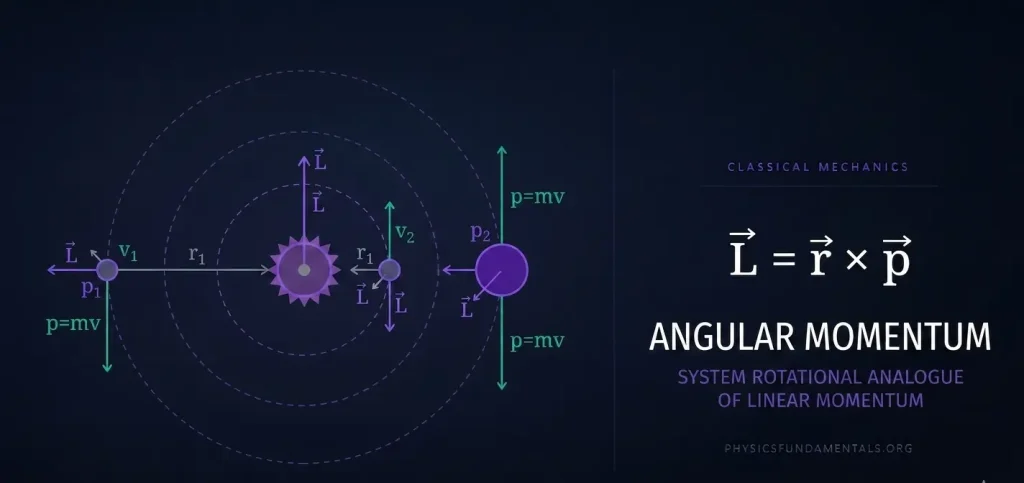
Angular Momentum
Angular momentum is the quantity of rotational motion possessed by a rotating object around an axis. It describes how strongly an object continues spinning and depends on the object’s mass, shape, and rotational speed. In physics, this is one of the most important conserved quantities and is represented by the equation: L = I ω…
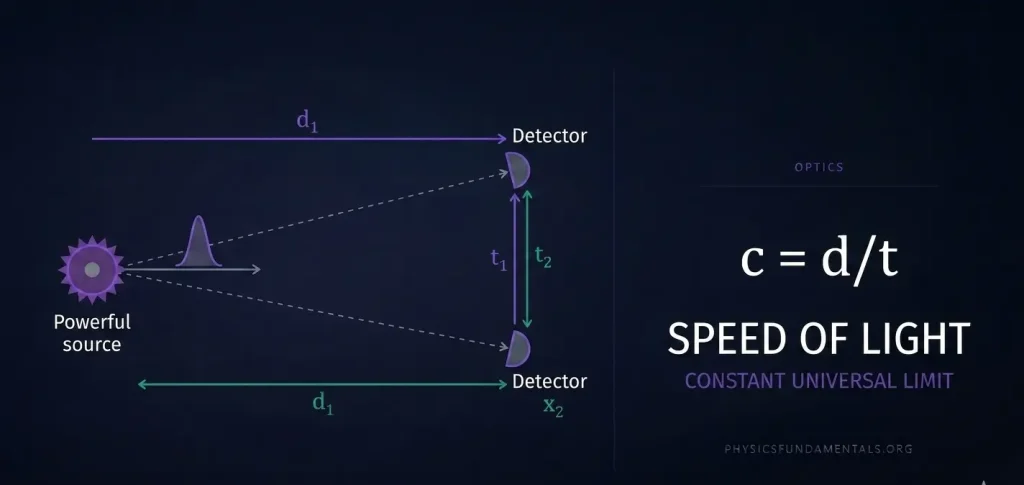
Speed of Light
The speed of light is the speed at which light waves travel through various materials. In a vacuum, the speed of light is defined as exactly 299,792,458 meters per second. The speed of light is one of the most fundamental constants in physics and represents the fastest speed at which energy, matter, and information can…
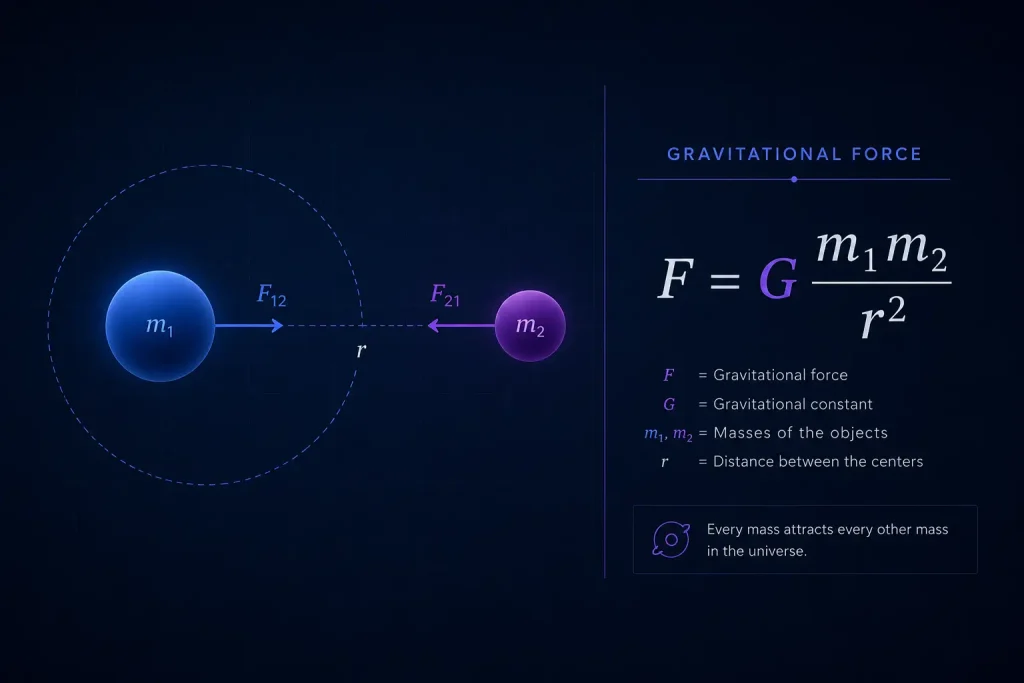
Gravitational Force
Newton’s law of gravitation states that every two objects with mass attract each other with a force that depends on their masses and the distance between them. Gravitational force is one of the most fundamental interactions in nature and the reason everything in the universe with mass attracts everything else. It governs the fall of…
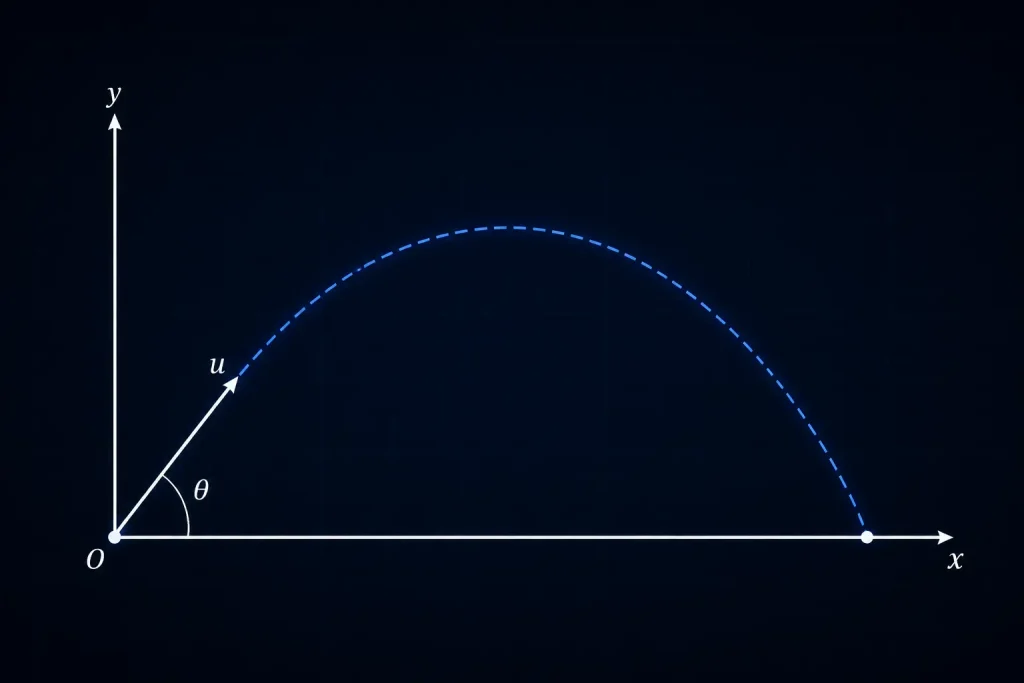
Projectile Motion
Projectile motion is the motion of an object launched into the air that moves only under the influence of gravity. A basketball shot, a football kick, a cannonball, or even water spraying from a fountain all follow the same graceful curved path through the air. Under the influence of gravity alone, this trajectory becomes a…
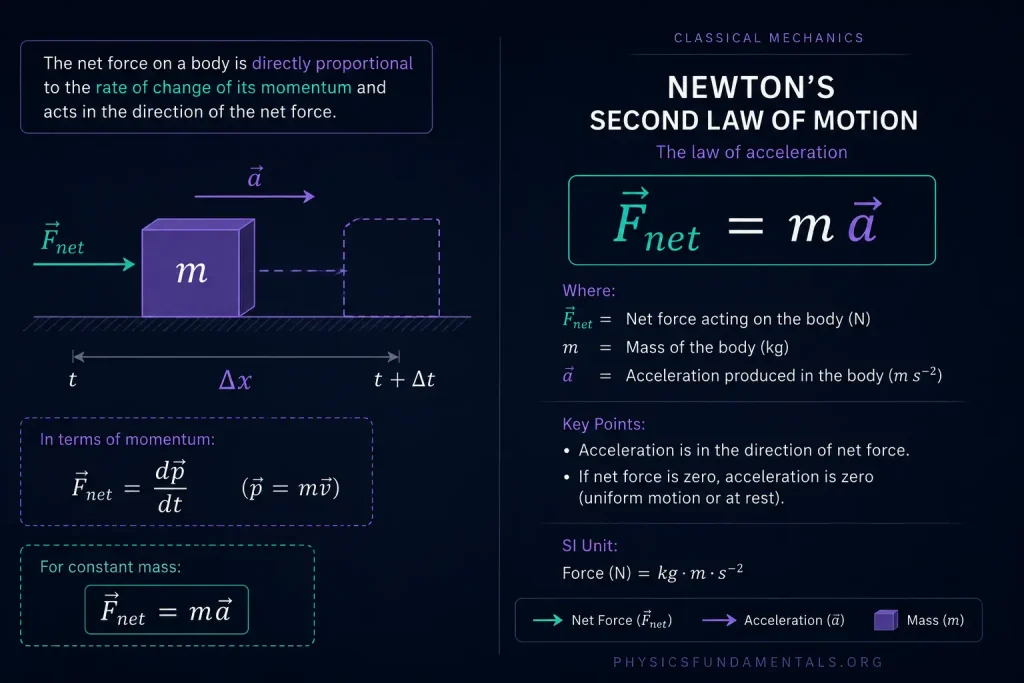
Newton’s Second Law
Newton’s Second Law of Motion states that the acceleration of an object is directly proportional to the net force acting on it and inversely proportional to its mass. In simple terms, stronger forces produce greater acceleration, while heavier objects resist changes in motion more strongly. This relationship is expressed through one of the most famous…
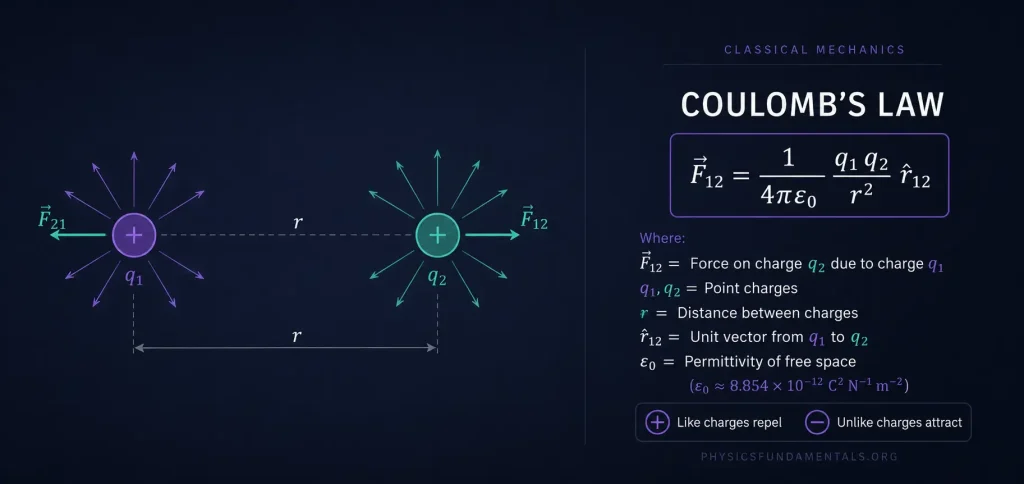
Coulomb’s Law
Electric Charge and Coulomb’s Law are two of the most important ideas in physics because they explain how objects become electrically charged and how charged particles push or pull each other. Every spark, lightning strike, electric field, atom, circuit, and electronic device depends on the behavior of electric charge. When two charged objects come close,…
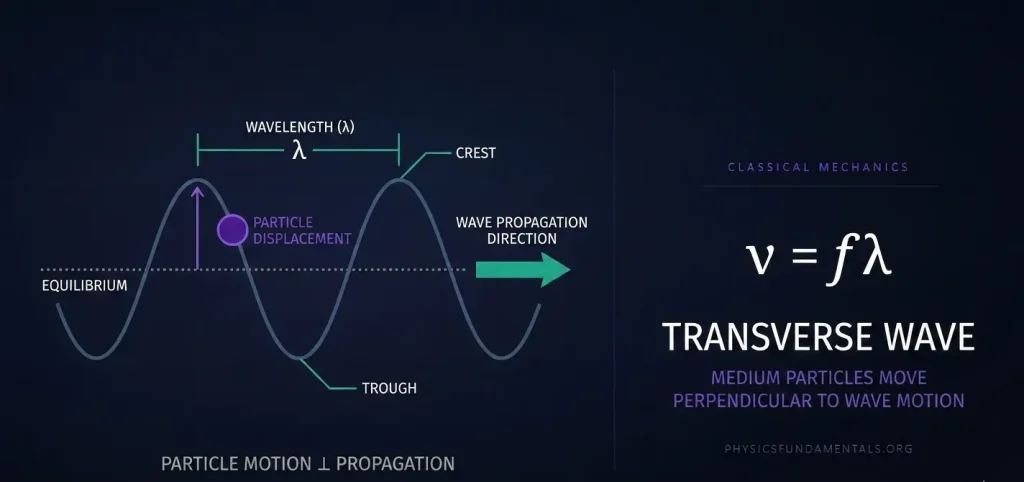
Transverse wave
A transverse wave is a wave in which the particles of the medium vibrate perpendicular (at right angles) to the direction the wave travels. When a drop hits still water and ripples spread outward while particles move up and down, it demonstrates a simple transverse wave pattern. Common examples include light waves, water ripples, waves…
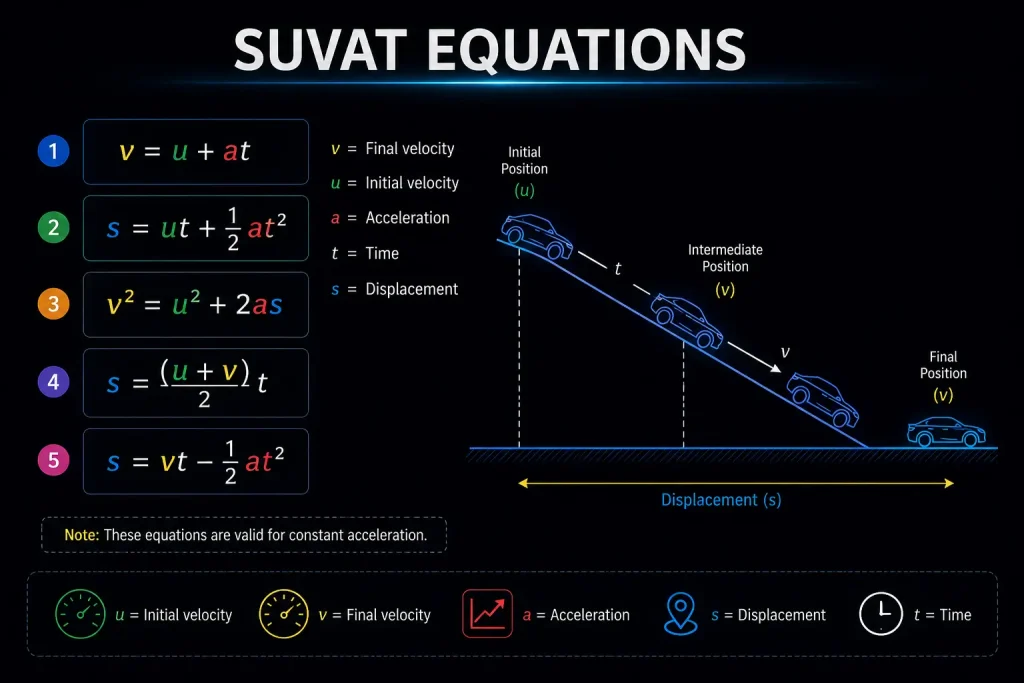
SUVAT Equations
SUVAT equations are kinematic formulas used to solve motion problems with constant acceleration. SUVAT equations are one of the most important topics in school physics because they help students solve motion problems quickly and logically.. If a car speeds up steadily, a stone falls under gravity, or a ball is thrown vertically upward, these equations…